Introduction
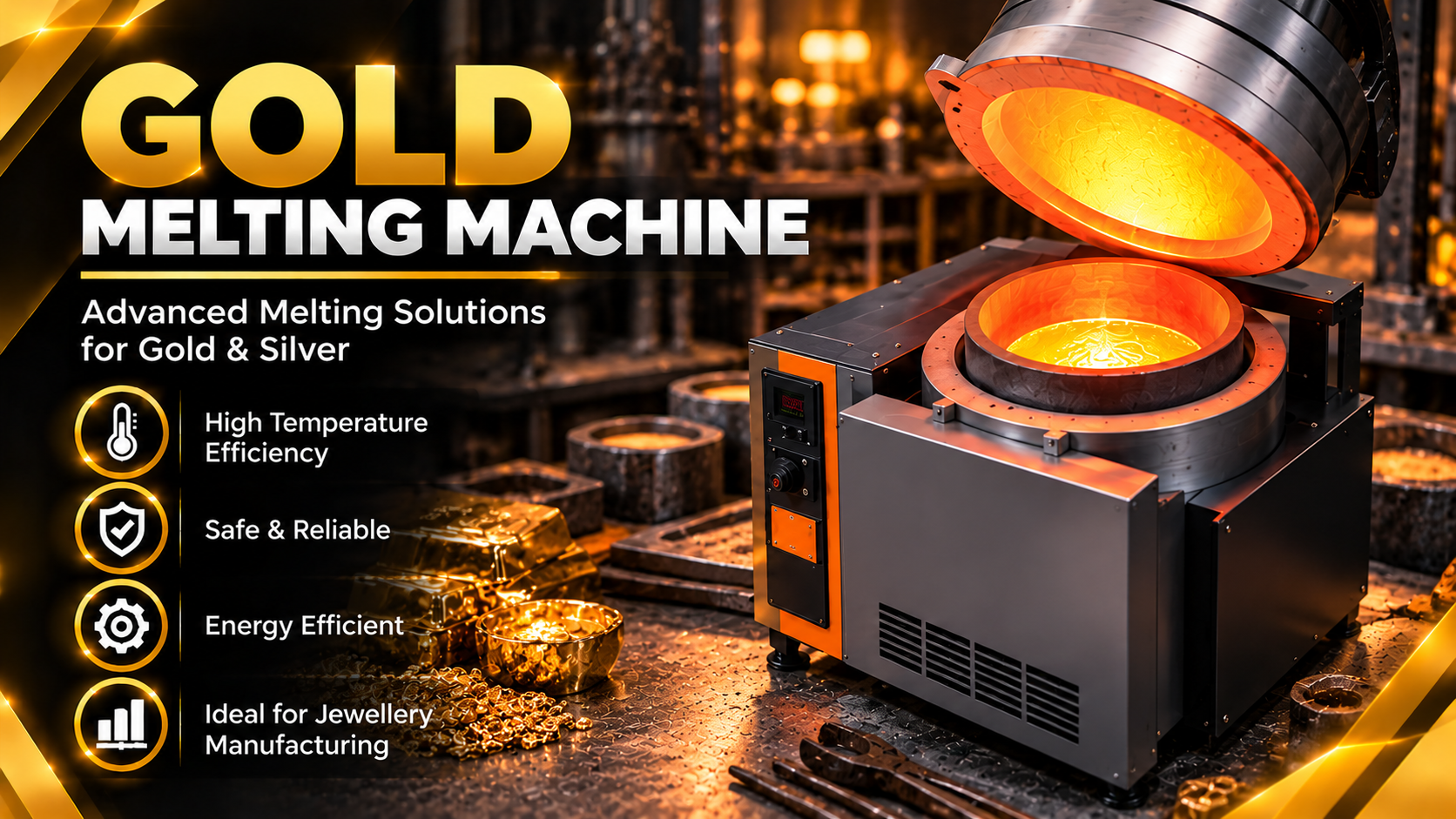
Modern jewellery manufacturing and precious metal processing industries depend on advanced equipment to achieve efficient, reliable and consistent production. Among the essential machines used in these industries, a gold melting machine plays an important role in melting gold and compatible precious metal alloys for various manufacturing applications.
A gold melting machine is specially designed to generate the high temperatures required to convert solid gold into molten metal. This molten gold can then be used in jewellery casting, metal processing and other specialized manufacturing operations.
Gold melting machines are available in different capacities, heating technologies and configurations. Electric gold melting furnaces and induction gold melting machines are commonly used in jewellery workshops and industrial manufacturing facilities.
However, not every gold melting machine is suitable for every production requirement. Melting capacity, heating technology, maximum temperature, electrical requirements, crucible compatibility and safety features can significantly affect machine performance.
At Jiyal Trading Co., Rajkot, Gujarat, customers can inquire about gold melting machines and related jewellery manufacturing equipment for different industrial requirements.
In this comprehensive guide, we explain what a gold melting machine is, how it works, its different types, important components, industrial applications, benefits, safety precautions, maintenance requirements and key factors to consider before purchasing.
1. What Is a Gold Melting Machine?
A gold melting machine is specialized equipment designed to heat gold and compatible precious metal alloys until they reach their melting temperatures.
Gold is widely used in jewellery manufacturing because of its appearance, workability and valuable material properties.
Pure gold has a melting point of approximately 1,064°C, while gold alloys may have different melting ranges depending on their composition.
A gold melting machine provides the thermal energy required to convert solid gold into liquid form for further processing.
Depending on the equipment design, gold melting machines may use electrical resistance heating, electromagnetic induction or other suitable heating technologies.
These machines are available in different sizes and capacities to meet various manufacturing requirements.
Common applications include:
- Gold jewellery manufacturing
- Gold casting operations
- Goldsmith workshops
- Precious metal processing
- Jewellery production facilities
- Selected precious metal recycling operations
- Industrial metalworking applications
- Research and development laboratories
The suitability of a gold melting machine depends on its technical specifications and intended application.
2. Important Features of a Gold Melting Machine
Gold melting machines offer several features that make them useful in jewellery manufacturing and precious metal processing.
High-Temperature Heating
Gold melting equipment is designed to generate temperatures sufficient to melt gold and compatible alloys.
The maximum operating temperature depends on the machine model and heating technology.
Temperature Monitoring and Control
Many modern gold melting machines include temperature indicators, controllers and monitoring systems.
These features help operators manage the melting process according to production requirements.
Different Melting Capacities
Gold melting machines are available in different rated capacities.
Compact machines may be suitable for smaller batches, while industrial equipment may support larger production requirements.
Efficient Heating Technology
Electric resistance heating and induction heating provide different methods of transferring energy to the metal.
The efficiency of each system depends on its design, operating conditions and application.
Crucible Compatibility
Gold melting machines use suitable crucibles designed to withstand the required operating conditions.
The crucible material, dimensions and configuration must be compatible with the selected machine.
Safety Features
Some machines include protective enclosures, temperature monitoring, cooling arrangements and other safety-related systems.
The availability of these features varies by equipment model.
3. Different Types of Gold Melting Machines
Gold melting equipment is available in several categories.
Understanding these types helps businesses choose machinery suitable for their production requirements.
Electric Gold Melting Furnace
An electric gold melting furnace uses electrical energy to generate heat.
Resistance-heated furnaces commonly use heating elements to transfer energy into the furnace chamber and crucible.
These machines may be suitable for jewellery workshops and selected industrial applications.
Induction Gold Melting Machine
An induction gold melting machine uses electromagnetic induction to generate heat in suitable electrically conductive materials or crucible arrangements.
Induction systems can provide rapid and controllable heating when correctly designed for the intended application.
They are used in various precious metal melting and industrial manufacturing operations.
Tabletop Gold Melting Furnace
A tabletop gold melting furnace is compact equipment designed for smaller working spaces and suitable batch quantities.
Its capacity, power requirements and operating limits depend on the manufacturer.
Industrial Gold Melting Furnace
Industrial gold melting furnaces are designed for manufacturing environments with specific production requirements.
These machines may offer larger melting capacities, specialized controls and additional operational features.
Gold and Silver Melting Furnace
Some melting furnaces are suitable for processing both gold and silver.
However, operators must verify equipment compatibility with the intended metal and alloy.
Digital Gold Melting Furnace
Certain electric melting furnaces include digital temperature indicators and electronic control systems.
These features can help operators monitor and manage operating temperatures.
The actual control accuracy depends on the equipment design.
4. How Does a Gold Melting Machine Work?
The working process of a gold melting machine depends on its heating technology.
In general, the machine generates thermal energy that is transferred to the metal through a suitable heating arrangement.
Metal Preparation
Gold or compatible gold alloy material is prepared according to the intended manufacturing process.
The material should be suitable for the equipment and free from unsafe contamination.
Crucible Selection
A suitable crucible is selected according to the machine design, metal type and processing requirements.
Heating Process
The machine generates heat through electrical resistance, induction or another appropriate heating method.
Temperature Increase
As the metal absorbs thermal energy, its temperature increases.
Melting Stage
When the metal reaches its melting range, it begins changing from solid to liquid form.
Molten Metal Processing
After complete melting, trained operators may transfer the molten metal to suitable casting or processing equipment.
Cooling and Solidification
The molten metal solidifies during the subsequent manufacturing process under controlled conditions.
The exact procedure depends on the machine, alloy, casting method and manufacturer’s operating instructions.
5. Major Benefits of Gold Melting Machines
Properly selected gold melting equipment can offer several practical advantages.
Controlled Melting Operations
Machines with suitable temperature monitoring systems can help operators manage heating conditions.
Improved Production Efficiency
Appropriate equipment may reduce unnecessary processing delays and support efficient jewellery manufacturing.
Consistent Manufacturing Processes
Standardized operating procedures and machine settings can improve process repeatability.
Different Capacity Options
Businesses can select melting equipment according to their batch size and production volume.
Compatibility With Jewellery Equipment
Gold melting machines can be used alongside suitable casting equipment, crucibles and other jewellery manufacturing tools.
Potential Energy Savings
Efficient equipment selection and appropriate operating practices can help businesses manage energy consumption.
Reduced Operational Interruptions
Regular maintenance and correct machine selection can help reduce avoidable equipment problems.
Actual benefits depend on the machine specifications, operating practices and production requirements.
6. Industrial Applications of Gold Melting Machines
Gold melting machines are used in several industries where precious metals require controlled heating and melting.
Jewellery Manufacturing Industry
Jewellery manufacturers melt gold and compatible alloys before casting them into different shapes and designs.
Goldsmith Workshops
Goldsmiths use melting equipment in suitable jewellery production and repair-related processes.
Precious Metal Casting
Casting operations require molten metal before it is introduced into an appropriate mould or casting system.
Precious Metal Recycling
Certain precious metal recovery and recycling operations involve melting stages.
Material testing, contamination control and safe processing procedures are important.
Industrial Metal Processing
Specialized melting equipment may be used in industrial applications involving gold and compatible precious metal alloys.
Research and Development
Research laboratories may use melting furnaces for controlled material studies and metallurgical experiments.
7. Gold Melting Machine in Jewellery Manufacturing
Gold melting machines are important equipment in modern jewellery manufacturing.
Jewellery production often requires gold or gold alloys to be melted before casting and shaping.
The melting process must be suitable for the metal composition and intended manufacturing method.
Gold Jewellery Casting
Gold melting machines prepare molten metal for suitable jewellery casting operations.
Alloy Processing
Gold is often combined with other metals to achieve specific material properties.
The melting range and processing requirements depend on the alloy composition.
Jewellery Production Workshops
Small and medium-sized jewellery workshops may use compact melting equipment according to their production needs.
Manufacturing Consistency
Suitable temperature management and standardized operating procedures can support consistent manufacturing processes.
Equipment Compatibility
Melting machines must be compatible with the crucibles, casting systems and other equipment used in production.
Businesses should select machinery according to their actual manufacturing requirements.
8. Gold Melting Machine in Precious Metal Casting
Precious metal casting is an important application of gold melting equipment.
Casting processes require metal to be heated until it becomes molten.
The molten metal is then introduced into a suitable mould or casting system.
Gold melting machines help provide the heating conditions required for this stage.
Temperature Management
The required processing temperature depends on the metal composition and casting method.
Crucible Selection
The crucible must be suitable for the intended alloy and operating conditions.
Casting Equipment Compatibility
The melting machine should be compatible with the selected casting process.
Material Quality
Contamination and unsuitable processing conditions can affect the final casting result.
Production Repeatability
Consistent operating procedures can support repeatable casting operations.
Manufacturers should follow established metallurgical procedures and equipment instructions.
9. Electric Gold Melting Furnace vs Induction Gold Melting Machine
Electric resistance furnaces and induction melting machines are commonly considered for precious metal processing.
Although both systems are used for melting, their heating principles are different.
Electric Gold Melting Furnace
Electric resistance furnaces generally use heating elements to transfer heat into the furnace chamber and crucible.
They may be suitable for various jewellery workshop and industrial applications.
Induction Gold Melting Machine
Induction melting machines use electromagnetic induction to generate heat in suitable conductive materials or crucible arrangements.
Properly designed induction systems can provide rapid and controllable heating.
Heating Technology
Electric resistance furnaces transfer heat through heating elements and furnace components.
Induction systems use electromagnetic energy.
Operating Requirements
Both systems require suitable electrical installations and operating arrangements.
Some induction systems may require additional cooling equipment.
Maintenance Considerations
Maintenance requirements depend on the machine design and its components.
Which Machine Should You Choose?
The appropriate choice depends on:
- Required melting capacity
- Production frequency
- Metal and alloy compatibility
- Available electrical infrastructure
- Operating costs
- Temperature control requirements
- Maintenance and servicing needs
Neither technology should be considered universally superior without evaluating the intended application.
10. How to Choose the Right Gold Melting Machine
Selecting suitable gold melting equipment requires evaluating several technical specifications.
Melting Capacity
Determine the quantity of gold or compatible alloy processed in each batch.
Choose equipment with an appropriate rated capacity.
Maximum Temperature
Verify that the machine can reach and maintain the temperature required for the intended metal.
Heating Technology
Compare electric resistance and induction heating according to production requirements.
Power Requirements
Check the voltage, phase, electrical load and installation specifications.
Temperature Control
Review the available temperature indicators, controllers and monitoring systems.
Crucible Compatibility
Confirm that the crucible material, size and design are appropriate.
Machine Dimensions
Consider the available installation space and workplace requirements.
Safety Features
Review protective systems and manufacturer-recommended safety arrangements.
Maintenance Requirements
Consider cleaning procedures, replacement components and servicing needs.
Supplier Documentation
Request relevant technical specifications and operating information before purchasing.
11. Common Mistakes When Buying a Gold Melting Machine
Purchasing unsuitable melting equipment can create operational difficulties and unnecessary expenses.
One common mistake is choosing a machine based only on its advertised price.
Another is selecting equipment with insufficient melting capacity for the intended workload.
Some buyers also overlook electrical requirements and installation arrangements.
Using an unsuitable crucible can create compatibility and safety problems.
Failing to consider maximum operating temperature may result in equipment that cannot meet the required processing conditions.
Buyers may also ignore maintenance requirements and replacement component availability.
Before purchasing, businesses should compare equipment specifications with their actual production requirements.
Where appropriate, customers should request demonstrations or additional technical information.
12. Important Safety Precautions
Gold melting involves extremely high temperatures and potentially dangerous molten metal.
Appropriate industrial safety procedures are essential.
Only trained personnel should operate gold melting equipment.
Use Protective Equipment
Operators should wear suitable personal protective equipment according to workplace risk assessments.
Prevent Moisture Contact
Moisture contacting molten metal can create dangerous conditions.
Crucibles, tools and materials must be prepared according to approved procedures.
Inspect Crucibles
Crucibles should be inspected before use and replaced when damaged.
Ensure Proper Ventilation
The workplace should have suitable ventilation for the intended melting process.
Check Electrical Safety
Electrical installations and maintenance should be handled by qualified personnel.
Follow Capacity Limits
Operators should never exceed the rated capacity or operating temperature limits.
Maintain Emergency Procedures
Workplaces should have appropriate fire protection and emergency arrangements.
Follow Manufacturer Instructions
The machine should always be operated according to the manufacturer’s recommendations.
Safe operation must take priority over production speed.
13. How to Maintain a Gold Melting Machine
Regular maintenance helps support reliable operation and equipment longevity.
Inspect Machine Components
Check visible components for damage, wear or unusual operating conditions.
Examine the Crucible
Inspect the crucible before operation and replace damaged units.
Maintain Cleanliness
Follow approved cleaning procedures to prevent unnecessary material buildup.
Check Electrical Connections
Qualified personnel should inspect electrical components and protective systems as recommended.
Maintain Cooling Systems
Where cooling is required, follow the manufacturer’s specified maintenance procedures.
Inspect Temperature Controls
Temperature monitoring and control systems should be checked according to the recommended service schedule.
Follow Maintenance Intervals
Use the maintenance intervals provided by the equipment manufacturer.
Maintain Service Records
Record servicing, component replacement and operational problems.
Proper maintenance supports consistent operation and helps identify potential equipment issues.
14. Factors Affecting Gold Melting Machine Price
Gold melting machine prices depend on several technical and commercial factors.
These include:
- Melting capacity
- Electric or induction heating technology
- Maximum operating temperature
- Temperature control features
- Machine construction
- Crucible configuration
- Cooling requirements
- Safety systems
- Electrical specifications
- Equipment size
- Replacement component availability
- Technical support
- Transportation and installation requirements
Machines with different capacities and heating technologies may have significantly different costs.
Buyers should compare technical specifications and long-term operating requirements rather than focusing only on the lowest quoted price.
Before purchasing, businesses should request current pricing and detailed product specifications.
15. Quality and Performance Evaluation of Gold Melting Machines
Evaluating machine quality and performance is important before making an equipment investment.
Heating Performance
The machine should be capable of reaching the required operating temperature.
Temperature Control
Available monitoring and control systems should be suitable for the intended process.
Melting Capacity
The rated capacity should match the required batch size.
Electrical Compatibility
The equipment should be compatible with the available electrical infrastructure.
Crucible Compatibility
The machine should support suitable crucibles for the intended metal.
Safety Systems
Relevant protective features should be reviewed according to the application.
Construction Quality
Equipment materials and construction should be appropriate for the operating environment.
Technical Documentation
Buyers should request available operating instructions, specifications and maintenance information.
Where appropriate, performance demonstrations can help customers evaluate equipment suitability.
16. Gold Melting Machines in Modern Jewellery Manufacturing
Gold melting machines continue to play an important role in jewellery manufacturing and precious metal processing.
Modern manufacturing businesses increasingly evaluate equipment according to production efficiency, process consistency, safety and operating requirements.
Electric and induction melting technologies provide different options for meeting these needs.
Compact machines may be appropriate for smaller workshops, while industrial systems may be selected for larger production operations.
However, different jewellery manufacturing processes require different machine specifications.
For example, equipment suitable for small-batch jewellery casting may not meet the production requirements of a larger manufacturing facility.
Businesses should therefore select melting equipment according to verified technical specifications.
Appropriate machine selection, operator training and regular maintenance can support reliable manufacturing operations.
17. Why Consider Jiyal Trading Co. for Gold Melting Machines?
Jiyal Trading Co. is based in Rajkot, Gujarat, India.
The company offers products associated with jewellery manufacturing and industrial equipment.
Customers looking for gold melting machines can contact the company to discuss available equipment, specifications and current pricing.
Important purchasing considerations include:
- Melting capacity
- Heating technology
- Maximum operating temperature
- Electrical requirements
- Crucible compatibility
- Installation requirements
- Maintenance needs
Before purchasing, buyers should confirm that the selected equipment is suitable for their intended application.
Jiyal Trading Co. can be contacted for information about available gold melting equipment and related products.
18. Frequently Asked Questions About Gold Melting Machines
Q1. What is a gold melting machine?
A gold melting machine is specialized equipment used to heat gold or compatible gold alloys until they reach their melting temperatures.
Q2. What temperature is required to melt gold?
Pure gold melts at approximately 1,064°C. Gold alloys may have different melting ranges depending on their composition.
Q3. What are the main types of gold melting machines?
Common types include electric resistance melting furnaces, induction melting machines, tabletop furnaces and industrial melting systems.
Q4. What is the difference between electric and induction gold melting machines?
Electric resistance furnaces typically use heating elements, while induction machines use electromagnetic induction to generate heat in suitable materials or crucible arrangements.
Q5. Can a gold melting machine melt silver?
Some gold melting machines are compatible with silver. Buyers should verify the manufacturer’s specifications before use.
Q6. How do I choose the right gold melting machine?
Consider melting capacity, heating technology, maximum temperature, electrical requirements, crucible compatibility and maintenance needs.
Q7. What factors affect gold melting machine prices?
Prices depend on capacity, heating technology, construction, temperature controls, safety features and other technical specifications.
Q8. Is a gold melting machine suitable for jewellery manufacturing?
Yes. Gold melting machines are commonly used in jewellery manufacturing and precious metal casting operations.
Q9. How should a gold melting machine be maintained?
Regular inspection, crucible checks, approved cleaning procedures and scheduled servicing help support reliable operation.
Q10. Can gold melting machines be used for industrial production?
Yes. Suitable industrial melting equipment can be used in manufacturing environments according to its rated capacity and technical specifications.
Q11. Are induction gold melting machines faster than electric furnaces?
Induction systems can provide rapid heating when correctly designed. Actual melting time depends on equipment specifications, batch size and operating conditions.
Q12. What safety precautions are required when melting gold?
Trained operators should follow manufacturer instructions, use suitable protective equipment, prevent moisture contact and maintain proper ventilation and electrical safety.
Q13. What is the role of a crucible in gold melting?
A crucible holds the metal during melting and must be compatible with the machine, alloy and operating conditions.
Q14. Where can I inquire about gold melting machines in Gujarat?
Customers can contact Jiyal Trading Co. in Rajkot, Gujarat, for information about available gold melting equipment.
Conclusion
A gold melting machine is an essential piece of equipment used in jewellery manufacturing, precious metal casting and selected industrial metalworking applications.
Its ability to generate the temperatures required for melting gold makes it an important part of various manufacturing processes.
Modern electric and induction gold melting machines provide different heating technologies, capacity options and operating features.
However, selecting the right equipment requires careful consideration of melting capacity, temperature requirements, electrical compatibility, crucible selection, safety features and maintenance needs.
Proper operation, regular maintenance and suitable equipment selection can help support efficient and consistent production.
Jiyal Trading Co. offers customers the opportunity to explore gold melting machines and related jewellery manufacturing equipment.
For product details, availability and quotations, visit:
Website: https://rituindustriesrajkot.com
Company: Jiyal Trading Co.
Location: Rajkot, Gujarat, India.
Contact Jiyal Trading Co. to discuss your gold melting machine and jewellery manufacturing equipment requirements.