Introduction
Jewellery manufacturing is a detailed process that requires precision, craftsmanship and the right equipment. From casting and shaping to polishing and final inspection, every stage contributes to the appearance and quality of finished jewellery.
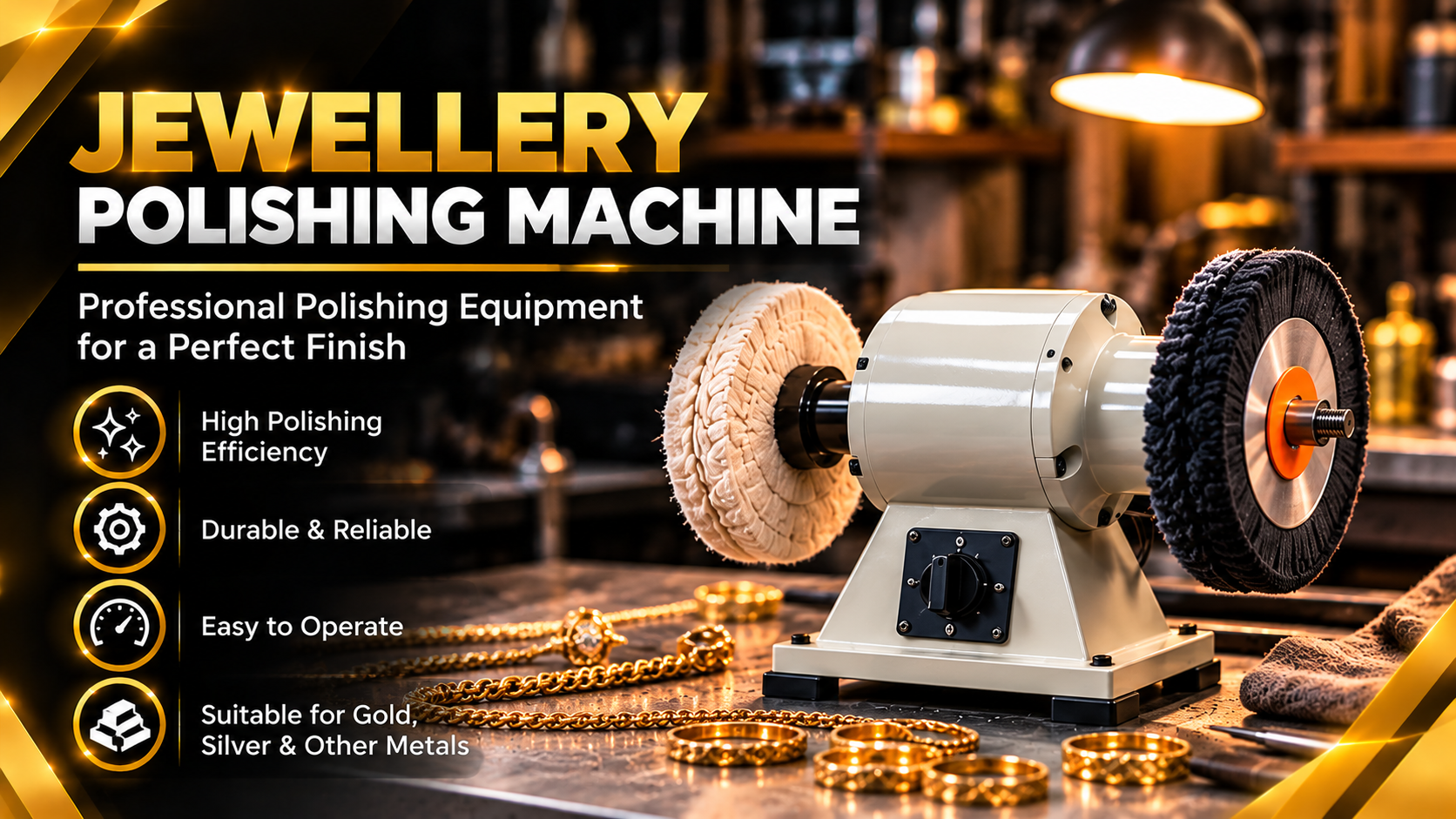
One of the most important pieces of equipment used during jewellery finishing is a jewellery polishing machine. These machines help manufacturers improve surface appearance, remove suitable finishing marks and achieve the desired shine on gold, silver and other compatible jewellery materials.
Whether you operate a small jewellery workshop, a professional goldsmith business or a large jewellery manufacturing facility, selecting appropriate polishing equipment can improve workflow efficiency and support consistent finishing results.
Modern jewellery polishing machines are available in different designs, capacities and operating configurations. Some are intended for manual buffing, while others support tumbling, vibratory finishing or specialized surface treatment processes.
At Jiyal Trading Co., Rajkot, Gujarat, customers can inquire about jewellery polishing equipment and other products used in jewellery manufacturing and industrial applications.
In this complete guide, we explain the different types of jewellery polishing machines, their working principles, advantages, applications, maintenance requirements and important buying considerations.
1. What Is a Jewellery Polishing Machine?
A jewellery polishing machine is equipment used to improve the surface finish of jewellery and compatible metal components.
Polishing is commonly performed after casting, shaping, filing, sanding or other manufacturing processes.
Depending on the equipment and finishing method, polishing can help reduce visible surface marks, smooth selected imperfections and produce a reflective finish.
Different jewellery materials may require different polishing tools, compounds and operating procedures.
Common applications include:
- Gold jewellery polishing
- Silver jewellery finishing
- Ring polishing
- Bracelet and bangle finishing
- Necklace component polishing
- Pendant polishing
- Jewellery repair and restoration
- Selected decorative metal finishing
The appropriate machine depends on jewellery design, material, surface condition and desired finish.
2. Why Is Jewellery Polishing Important?
Polishing is an essential stage in many jewellery manufacturing processes because surface appearance strongly influences the presentation of the finished product.
Improved Surface Appearance
Polishing can help jewellery achieve a smooth and attractive surface.
Enhanced Shine
Suitable polishing techniques can produce a bright, reflective finish on compatible jewellery materials.
Removal of Finishing Marks
Polishing may reduce fine scratches and surface marks left by previous manufacturing stages.
Professional Presentation
Consistent finishing contributes to the visual quality of jewellery products.
Preparation for Final Inspection
Polishing allows manufacturers to evaluate the finished appearance before cleaning, inspection and packaging.
However, polishing cannot correct every casting defect or structural problem. Significant imperfections may require earlier manufacturing stages to be repeated.
3. Different Types of Jewellery Polishing Machines
Jewellery polishing equipment is available in several configurations.
Understanding these options helps manufacturers choose suitable machinery.
Bench Jewellery Polishing Machine
Bench polishing machines are commonly used in jewellery workshops.
They typically use a motor-driven spindle that holds polishing wheels or buffs.
Operators manually present suitable jewellery components to the rotating polishing medium.
These machines are useful for controlled finishing when operated by trained personnel.
Double-Sided Buffing Machine
A double-sided buffing machine may support polishing wheels on both sides of a motor.
Different polishing wheels or compounds can be used according to the equipment design and operating procedure.
Jewellery Magnetic Polishing Machine
Magnetic polishing machines use a magnetic drive system and suitable finishing media.
They may be used for selected jewellery components, including items with small recesses or intricate features.
Compatibility depends on the jewellery material, stones, settings and finishing requirements.
Vibratory Jewellery Polishing Machine
Vibratory finishing machines move jewellery components together with suitable finishing media.
They are used for selected batch finishing operations.
Rotary Tumbler Polishing Machine
Rotary tumblers use a rotating container and appropriate media to perform finishing operations.
They may be useful for certain jewellery components requiring batch processing.
Jewellery Polishing Motor
A polishing motor provides rotational power for suitable polishing wheels and accessories.
The motor’s speed, power rating and accessory compatibility influence its intended applications.
4. How Does a Jewellery Polishing Machine Work?
The working principle depends on the type of polishing machine.
In a conventional buffing machine, an electric motor rotates a polishing wheel.
A suitable polishing compound may be applied to the wheel to support the finishing process.
The operator carefully positions the jewellery component against the appropriate working area of the wheel.
The interaction between the polishing medium and the jewellery surface removes a controlled amount of surface material.
This process can reduce minor imperfections and create the desired finish.
Different polishing stages may use different compounds, wheel materials and operating techniques.
In magnetic, rotary or vibratory machines, the finishing process uses moving media rather than direct manual contact with a rotating buff.
Each method has specific operating requirements and limitations.
5. Major Benefits of Using Jewellery Polishing Machines
Suitable jewellery polishing equipment offers several practical advantages.
Consistent Surface Finishing
Standardized procedures can help manufacturers achieve repeatable finishing results.
Improved Workflow Efficiency
Appropriate machinery can reduce the time required for certain finishing operations compared with fully manual methods.
Different Finishing Options
Various wheels, compounds and machine types support different surface finishes.
Support for Jewellery Production
Polishing equipment is an important part of many jewellery manufacturing workflows.
Processing Flexibility
Different machines are available for individual pieces and compatible batch finishing applications.
Potential Cost Efficiency
Correct equipment selection and maintenance can help reduce unnecessary rework and production delays.
Actual results depend on operator skill, jewellery design and machine suitability.
6. Applications of Jewellery Polishing Machines
Jewellery polishing machines are used in a wide range of manufacturing and finishing activities.
Gold Jewellery Manufacturing
Gold jewellery manufacturers use suitable polishing systems to finish rings, chains, bangles, pendants and other products.
Silver Jewellery Finishing
Silver jewellery often requires appropriate surface preparation and polishing to achieve the desired appearance.
Ring and Bracelet Polishing
Polishing machines help improve the surface finish of compatible rings and bracelets.
Jewellery Repair Workshops
Repair professionals may use polishing equipment during suitable restoration and refinishing operations.
Decorative Metal Components
Certain polishing machines can also be used for compatible decorative metal products.
Jewellery Production Facilities
Manufacturers may combine manual polishing equipment with batch finishing systems to support different production stages.
7. How to Choose the Right Jewellery Polishing Machine
Selecting suitable jewellery polishing equipment requires careful consideration of several factors.
Jewellery Material
Determine whether the machine is suitable for gold, silver or other materials being processed.
Type of Jewellery
Different designs may require different polishing methods.
For example, delicate jewellery with gemstones may need special handling.
Production Capacity
Consider the number of pieces requiring polishing during normal operations.
Motor Power
Review the motor’s rated power and intended workload.
Operating Speed
Choose equipment with suitable speed characteristics for the intended polishing operation.
Machine Construction
Check the machine’s stability, construction quality and suitability for workshop use.
Dust Collection
Polishing operations may generate fine dust containing metal particles and polishing compounds.
Suitable dust extraction and collection systems are important for workplace safety.
Maintenance and Support
Consider spare parts, accessories, servicing and supplier assistance.
8. Jewellery Polishing Machine vs Manual Polishing
Manual polishing and machine-assisted polishing are both used in jewellery manufacturing.
Traditional hand polishing can provide detailed control for selected surfaces and intricate work.
Machine-assisted polishing uses mechanical motion to support the finishing process.
Speed
Suitable machines may process certain surfaces more quickly than fully manual techniques.
Control
Hand tools may offer better access to some delicate or difficult-to-reach areas.
Consistency
Machine-assisted processes can support repeatable results when operating conditions are controlled.
Production Volume
Batch finishing machines may be appropriate for certain higher-volume applications.
Equipment Requirements
Machine polishing requires suitable tools, accessories, safety measures and maintenance.
Many jewellery workshops use a combination of manual and machine-assisted finishing methods.
9. Important Safety Precautions During Jewellery Polishing
Jewellery polishing equipment contains moving components that can create serious hazards.
Operators should receive appropriate training before using polishing machinery.
Loose clothing, jewellery and unsecured hair must be kept away from rotating parts.
Suitable eye and face protection should be used according to the equipment and workplace risk assessment.
Polishing dust must be controlled through appropriate extraction and housekeeping practices.
Workshops should follow applicable occupational safety requirements.
Damaged polishing wheels and unsuitable accessories should not be used.
Operators should never exceed the rated operating speed of a wheel or accessory.
Machines must be switched off and isolated before maintenance or accessory replacement.
Special care is necessary when handling small jewellery components near rotating equipment.
Safe operation should always take priority over finishing speed.
10. How to Maintain a Jewellery Polishing Machine
Regular maintenance supports safe and reliable machine operation.
Clean the Machine
Remove polishing residue using approved cleaning methods.
Inspect Polishing Wheels
Check wheels and buffs for damage, excessive wear or contamination.
Check Motor Condition
Follow the manufacturer’s maintenance recommendations for the motor.
Inspect Electrical Connections
Qualified personnel should examine electrical components as required.
Maintain Dust Collection Systems
Clean and service extraction equipment according to its operating instructions.
Replace Worn Accessories
Damaged or unsuitable accessories should be replaced before use.
Keep Maintenance Records
Document servicing, inspections and component replacement.
A preventive maintenance routine can help reduce avoidable downtime.
11. Common Mistakes When Buying Jewellery Polishing Equipment
One common purchasing mistake is selecting a machine based only on price.
Another is choosing equipment without considering the jewellery material or finishing requirements.
Buyers may also overlook motor power, operating speed and dust extraction arrangements.
Using unsuitable polishing wheels can affect finishing quality and increase operational risks.
Businesses should also consider the availability of replacement accessories and technical support.
Before purchasing, compare machine specifications with the intended production process.
12. Factors Affecting Jewellery Polishing Machine Price
The price of a jewellery polishing machine depends on several factors.
Important considerations include:
- Machine type
- Motor power
- Speed control features
- Machine construction
- Number of polishing stations
- Dust collection arrangements
- Included accessories
- Brand and manufacturing specifications
- Warranty
- Supplier support
Compact polishing motors and specialized finishing systems may have very different prices.
Businesses should compare the equipment’s capabilities and total ownership cost rather than focusing only on the initial purchase price.
13. Jewellery Polishing Compounds and Accessories
Polishing machines often require additional accessories.
Polishing Wheels
Different wheel materials are suitable for different finishing stages.
Buffing Compounds
Polishing compounds contain abrasive or finishing materials selected for particular applications.
Brushes
Specialized brushes may be used for compatible jewellery shapes and surfaces.
Finishing Media
Magnetic, vibratory and rotary systems require suitable finishing media.
Dust Collection Equipment
Appropriate extraction systems help control airborne particles and collect polishing residue.
Protective Equipment
Operators need suitable personal protective equipment and safe working arrangements.
Accessories should always be compatible with the machine and jewellery material.
14. Jewellery Polishing and Product Quality
Surface finishing plays an important role in the appearance of jewellery.
Customers often evaluate jewellery according to design, shine, surface smoothness and overall craftsmanship.
A well-managed polishing process can improve product presentation and support consistent manufacturing standards.
However, excessive polishing may remove unnecessary material, soften fine details or damage delicate components.
Manufacturers should therefore establish suitable finishing procedures for different product categories.
Quality inspection after polishing can help identify remaining surface defects or areas requiring additional attention.
Consistent polishing practices are especially useful for businesses producing multiple pieces of similar designs.
15. Why Consider Jiyal Trading Co. for Jewellery Equipment?
Jiyal Trading Co. is located in Rajkot, Gujarat, India.
The company offers products associated with jewellery manufacturing and various industrial applications.
Its listed product categories include jewellery polishing machines, gold melting equipment, graphite crucibles, graphite products and other industrial items.
Customers looking for jewellery polishing equipment can contact the company to discuss their requirements.
Before purchasing, buyers should confirm available models, technical specifications, accessory compatibility, current prices and delivery arrangements.
Choosing the right equipment can support a more efficient jewellery manufacturing workflow.
16. Frequently Asked Questions
Q1. What is a jewellery polishing machine?
A jewellery polishing machine is equipment used to improve the surface finish and appearance of compatible jewellery products.
Q2. Which polishing machine is suitable for gold jewellery?
The appropriate machine depends on the jewellery design, material, production volume and required finish.
Q3. Can a jewellery polishing machine be used for silver jewellery?
Yes, suitable polishing machines and accessories can be used for silver jewellery finishing.
Q4. What is the difference between polishing and buffing?
The terms are sometimes used interchangeably, but they may describe different finishing stages, abrasive grades or surface treatment methods.
Q5. How do I choose a polishing machine for a small workshop?
Consider available workspace, production volume, motor specifications, dust extraction and the types of jewellery being finished.
Q6. Are jewellery polishing machines safe?
They can be operated safely when suitable equipment, training, protective measures and manufacturer procedures are used.
Q7. How often should a jewellery polishing machine be maintained?
Maintenance frequency depends on the machine, operating hours, working conditions and manufacturer recommendations.
Q8. Where can I inquire about jewellery polishing machines in Gujarat?
Customers can contact Jiyal Trading Co. in Rajkot, Gujarat, for information about available jewellery polishing equipment.
Conclusion
A jewellery polishing machine is an important tool for manufacturers seeking suitable surface finishing solutions.
Different polishing systems offer different advantages depending on jewellery material, product design and production requirements.
From conventional bench polishing motors to specialized batch finishing machines, choosing the correct equipment can support consistent surface quality and efficient manufacturing.
Businesses should evaluate machine specifications, operating safety, accessories, maintenance and supplier support before purchasing.
Jiyal Trading Co. offers jewellery manufacturing equipment and related industrial products for different customer requirements.
For product information, specifications and quotations, visit:
Website: https://rituindustriesrajkot.com
Company: Jiyal Trading Co.
Location: Rajkot, Gujarat, India.
Contact Jiyal Trading Co. to discuss your jewellery polishing machine and industrial equipment requirements.