Introduction
Modern industrial manufacturing depends on a wide range of raw materials that offer specific physical, chemical and mechanical properties. Among these materials, graphite powder plays an important role in various manufacturing and engineering applications.
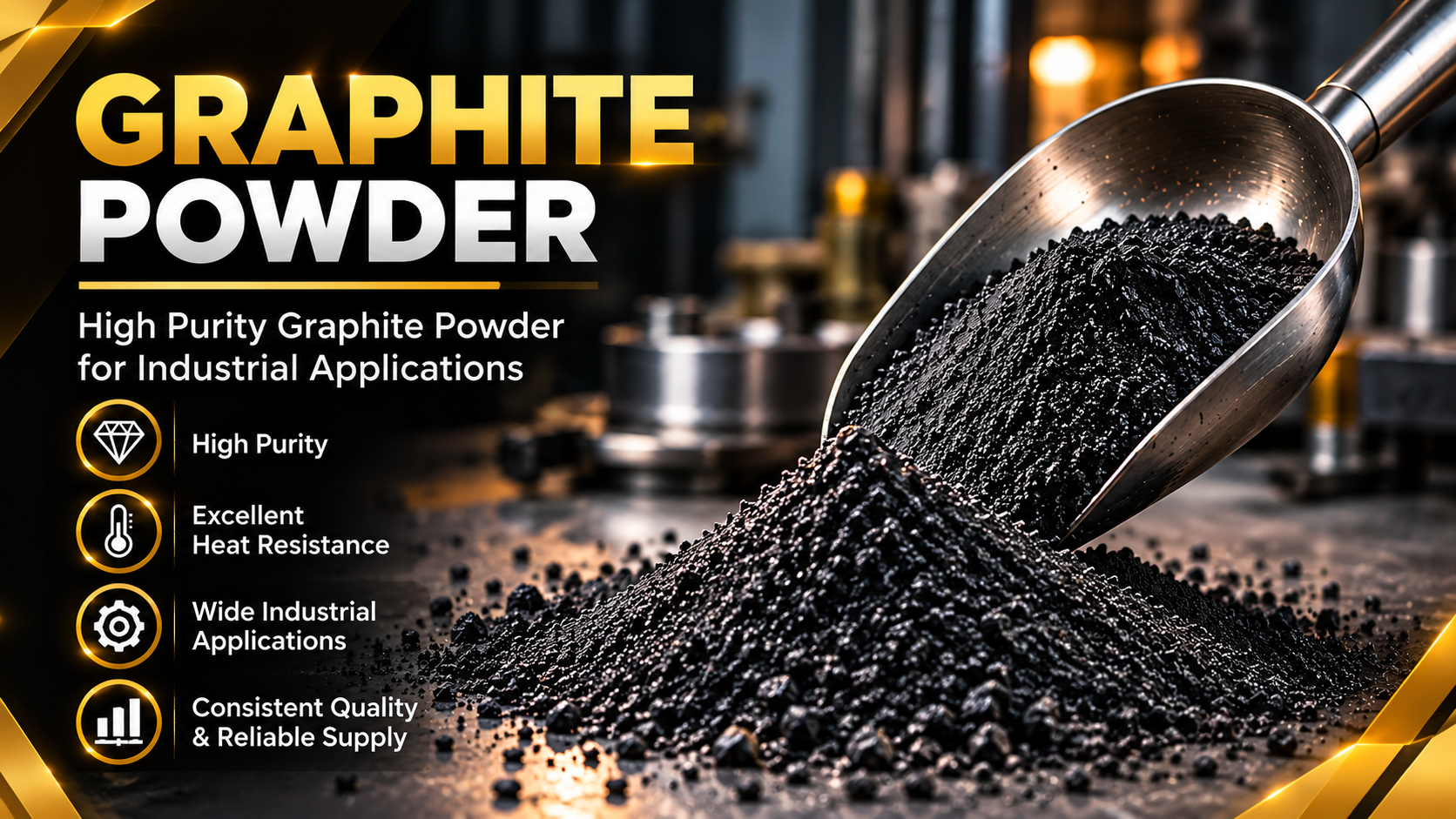
Graphite powder is a finely divided form of graphite, a crystalline form of carbon known for its layered structure, electrical conductivity, thermal properties and useful friction characteristics.
It is used in selected industrial processes involving lubrication, foundry operations, conductive materials, coatings, refractory products and other specialized applications.
However, not every graphite powder is suitable for every industrial use. Particle size, carbon purity, ash content, moisture, processing method and other specifications can significantly affect material performance.
At Jiyal Trading Co., Rajkot, Gujarat, customers can inquire about graphite powder and related graphite products for different industrial requirements.
In this complete guide, we explain what graphite powder is, how it is produced, its important properties, types, applications, benefits, handling requirements and key factors to consider before purchasing.
1. What Is Graphite Powder?
Graphite powder is a powdered material consisting primarily of graphite particles.
Graphite is a naturally occurring or synthetically manufactured crystalline form of carbon.
Its structure consists of layers of carbon atoms arranged in a hexagonal pattern.
The bonding within these layers is strong, while the interaction between adjacent layers is comparatively weak.
This structure contributes to graphite’s characteristic behaviour, including its ability to provide low-friction performance in suitable applications.
Graphite powder is available in different particle sizes, purity levels and grades.
Common industrial applications include:
- Selected dry lubrication systems
- Foundry coatings
- Refractory manufacturing
- Electrically conductive formulations
- Industrial coatings
- Metal processing
- Specialized composite materials
- Certain battery and energy-storage applications
The suitability of graphite powder depends on its grade and technical specifications.
2. Important Properties of Graphite Powder
Graphite powder offers several properties that make it useful in selected industrial applications.
Electrical Conductivity
Graphite conducts electricity because of its electronic structure.
However, the conductivity of a graphite powder formulation depends on factors such as particle characteristics, concentration and contact between particles.
Thermal Conductivity
Graphite can transfer heat efficiently.
Thermal performance varies according to material grade, particle orientation and the surrounding formulation.
Low-Friction Behaviour
Graphite’s layered structure can contribute to low-friction characteristics in appropriate environments.
High-Temperature Performance
Graphite can retain useful properties at high temperatures in suitable atmospheres.
However, it can oxidize in air at elevated temperatures, so operating conditions must be considered carefully.
Chemical Compatibility
Graphite is compatible with many industrial environments, but not all chemicals or processes.
Particle Size Flexibility
Graphite powder is available in different particle size distributions for different manufacturing requirements.
3. Different Types of Graphite Powder
Graphite powder is available in several categories.
Natural Graphite Powder
Natural graphite is obtained from mineral deposits and processed into suitable grades.
Its properties depend on the source and purification process.
Synthetic Graphite Powder
Synthetic graphite is produced through industrial manufacturing processes using suitable carbon-based materials.
It may be selected for applications requiring particular material characteristics.
Fine Graphite Powder
Fine graphite powder contains relatively small particles.
It is used in applications where a fine particle distribution is required.
Flake Graphite Powder
Flake graphite consists of particles with a characteristic plate-like structure.
It is used in selected industrial formulations and materials.
High-Purity Graphite Powder
High-purity grades undergo processing to achieve specified carbon purity levels.
They may be required for specialized industrial applications.
Micronized Graphite Powder
Micronized graphite is processed to obtain a fine particle size distribution.
Its suitability depends on the required particle size and material specifications.
4. How Is Graphite Powder Manufactured?
Graphite powder manufacturing methods vary depending on whether the source material is natural or synthetic.
Raw Material Selection
Suitable graphite or carbon-based raw materials are selected.
Crushing and Grinding
The material may be reduced into smaller particles through mechanical processing.
Classification
Particles may be separated according to size requirements.
Purification
Some grades undergo additional processing to reduce impurities.
Quality Testing
Manufacturers may test particle size, carbon content, moisture and ash content.
Packaging
The finished powder is packed using suitable materials to protect it during storage and transportation.
The exact manufacturing process depends on the required product grade.
5. Major Benefits of Graphite Powder
Suitable graphite powder can offer several practical advantages.
Versatile Applications
Different grades can be used in a wide range of industrial formulations.
Useful Friction Characteristics
Graphite may reduce friction in compatible lubrication applications.
Conductive Properties
Its electrical conductivity makes it useful in selected conductive materials.
Thermal Performance
Graphite can contribute to thermal management in appropriate formulations.
Different Available Grades
Buyers can select products according to purity, particle size and application requirements.
Potential Manufacturing Value
Correct material selection can help support consistent product performance and process efficiency.
Actual benefits depend on the formulation and operating conditions.
6. Industrial Applications of Graphite Powder
Graphite powder is used across several industrial sectors.
Lubrication Industry
Certain graphite powders are used in dry lubricants and lubricant formulations.
Their effectiveness depends on the environment, surface materials and operating conditions.
Foundry Industry
Graphite-containing coatings may be used in selected casting and mould-related applications.
Refractory Industry
Graphite is incorporated into certain refractory products to achieve specific material properties.
Electrical Industry
Graphite powder is used in selected conductive formulations and components.
Industrial Coatings
Graphite may be included in coatings designed for particular functional characteristics.
Composite Manufacturing
Graphite particles can be used as fillers in compatible composite materials.
Metal Processing
Certain graphite formulations are used in specialized metalworking processes.
7. Graphite Powder in Lubrication Applications
Graphite powder is associated with lubrication because of its layered structure.
In suitable applications, graphite particles can contribute to reduced friction between contacting surfaces.
However, graphite’s lubricating performance depends on operating conditions.
Humidity, temperature, surface characteristics, loading and material compatibility can influence results.
Graphite powder should not be assumed suitable for every bearing, machine or moving component.
For critical machinery, buyers should consult the equipment manufacturer or lubrication specialist before selecting a graphite-based product.
8. Graphite Powder in Foundry Applications
Foundries use various materials to support mould preparation, casting and surface treatment operations.
Graphite powder may be incorporated into certain foundry coatings or related formulations.
The intended function depends on the specific process and product design.
Particle size, purity and compatibility with other ingredients are important considerations.
Foundry operators should follow the formulation supplier’s recommendations.
Using an unsuitable grade may affect process consistency or casting quality.
For repeat production, material specifications should be maintained consistently.
9. Graphite Powder vs Carbon Black
Graphite powder and carbon black are both carbon-based materials, but they have different structures and typical applications.
Graphite Powder
Graphite has a crystalline layered structure.
It is used in selected lubrication, thermal, electrical and industrial applications.
Carbon Black
Carbon black consists of fine carbon particles produced through specialized industrial processes.
It is widely used in rubber reinforcement, pigments and other formulations.
Which Material Should You Choose?
The correct choice depends on the required properties.
Particle structure, conductivity, reinforcement behaviour and formulation compatibility should be considered.
These materials should not be treated as direct substitutes without technical evaluation.
10. How to Choose the Right Graphite Powder
Choosing suitable graphite powder requires reviewing several technical specifications.
Carbon Purity
Different applications require different purity levels.
Particle Size
Particle size can influence dispersion, surface characteristics and processing behaviour.
Ash Content
Ash content indicates the amount of inorganic residue under specified testing conditions.
Moisture Content
Moisture may affect storage, processing and formulation performance.
Graphite Type
Determine whether natural or synthetic graphite is appropriate.
Particle Distribution
Some applications require a controlled particle size distribution rather than a single nominal size.
Packaging Requirements
Choose packaging appropriate for storage, transportation and handling.
Supplier Documentation
Request relevant specifications and testing information where necessary.
11. Common Mistakes When Buying Graphite Powder
One common mistake is purchasing graphite powder based only on price.
Another is selecting a grade without confirming its carbon purity or particle size.
Buyers may also assume that all graphite powders provide identical performance.
Using unsuitable material in conductive formulations, coatings or lubrication systems can affect the final product.
Poor packaging and storage may introduce contamination or moisture.
Before placing a bulk order, businesses should evaluate the material against their technical requirements.
Where appropriate, sample testing can help confirm suitability.
12. Important Safety Precautions
Graphite powder should be handled using suitable industrial safety procedures.
Fine powder can become airborne during handling and processing.
Appropriate dust control, ventilation and housekeeping practices are important.
Operators should follow the supplier’s safety data sheet and workplace risk assessment.
Suitable respiratory protection may be required depending on exposure conditions.
Graphite is electrically conductive, so dust accumulation around electrical equipment can create hazards.
Fine combustible dust may also present fire or explosion risks under certain conditions.
Industrial facilities should evaluate dust hazards and implement appropriate controls.
Safe storage, handling and cleaning practices are essential.
13. How to Store Graphite Powder
Correct storage helps maintain product quality.
Use Suitable Containers
Keep graphite powder in packaging designed for the material.
Prevent Moisture Exposure
Follow supplier recommendations for controlling moisture.
Avoid Contamination
Store the material away from incompatible substances and unnecessary dust.
Maintain Clear Labels
Identify product grade, batch and relevant specifications.
Follow Safety Requirements
Use appropriate handling and storage procedures for powdered industrial materials.
Inspect Packaging
Check for damage before moving or using the material.
Proper storage supports product consistency and traceability.
14. Factors Affecting Graphite Powder Price
Graphite powder prices depend on several technical and commercial factors.
These include:
- Natural or synthetic origin
- Carbon purity
- Particle size
- Particle size distribution
- Ash content
- Moisture specifications
- Processing requirements
- Packaging quantity
- Order volume
- Quality documentation
- Transportation arrangements
Specialized high-purity or tightly controlled grades may have different costs from general industrial materials.
Buyers should compare specifications and suitability rather than focusing only on the lowest quoted price.
15. Quality Testing for Graphite Powder
Quality testing helps buyers understand whether a graphite powder meets the intended requirements.
Common evaluation factors include carbon content, ash content, moisture and particle size distribution.
Some applications may require additional testing for impurities, surface characteristics or electrical properties.
The appropriate testing method depends on the product specification.
Industrial buyers should communicate their acceptance criteria before purchasing.
For repeat orders, maintaining consistent specifications can support reliable manufacturing operations.
Where required, customers may request available certificates of analysis or other quality documentation.
16. Graphite Powder in Modern Industrial Manufacturing
Graphite powder continues to be used in various industrial applications because of its combination of material characteristics.
Manufacturers increasingly evaluate raw materials according to performance, process consistency, safety and quality requirements.
Different graphite grades may be used in conductive materials, specialized coatings, refractory products and engineered composites.
However, the requirements for these applications can vary significantly.
For example, graphite intended for a general industrial coating may not meet the purity and particle characteristics required for an advanced electrical application.
Businesses should therefore select materials according to verified technical specifications.
17. Why Consider Jiyal Trading Co. for Graphite Products?
Jiyal Trading Co. is based in Rajkot, Gujarat, India.
The company offers products associated with graphite applications, jewellery manufacturing and industrial equipment.
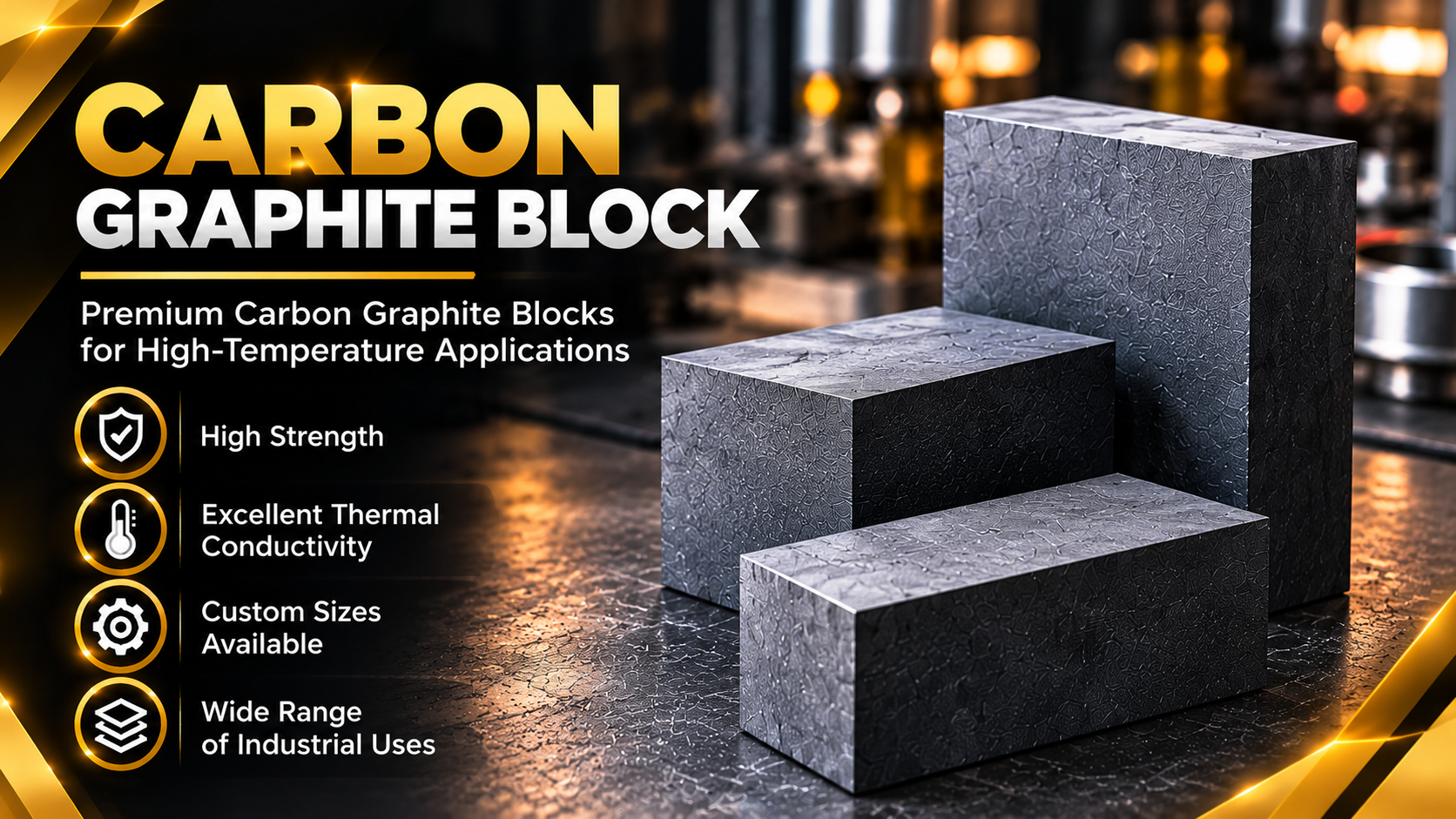
Its product range includes graphite powder, carbon graphite blocks, graphite crucibles, carbon rods and other industrial products.
Customers looking for graphite powder can contact the company to discuss available grades, packaging quantities, specifications and current pricing.
Before purchasing, buyers should confirm product suitability for their intended application.
18. Frequently Asked Questions About Graphite Powder
Q1. What is graphite powder?
Graphite powder is a finely divided form of graphite used in suitable industrial and manufacturing applications.
Q2. What are the main uses of graphite powder?
Graphite powder is used in selected lubrication, foundry, refractory, conductive and industrial coating applications.
Q3. Is graphite powder electrically conductive?
Yes. Graphite is electrically conductive, although the conductivity of a powder-based formulation depends on several factors.
Q4. Is graphite powder heat-resistant?
Graphite can perform at high temperatures in suitable atmospheres, but it can oxidize in air at elevated temperatures.
Q5. What is the difference between natural and synthetic graphite powder?
Natural graphite is obtained from mineral deposits, while synthetic graphite is manufactured through industrial processing.
Q6. How do I choose the right graphite powder?
Consider carbon purity, particle size, ash content, moisture, material type and intended application.
Q7. Can graphite powder be used as a lubricant?
Certain graphite powders are suitable for specific lubrication applications, subject to operating conditions and equipment compatibility.
Q8. Where can I inquire about graphite powder in Gujarat?
Customers can contact Jiyal Trading Co. in Rajkot, Gujarat, for information about available graphite products.
Conclusion
Graphite powder is a versatile carbon-based material used in many industrial applications.
Its layered structure, electrical conductivity, thermal characteristics and friction-related properties make it useful in suitable manufacturing processes.
However, different graphite powders have different specifications and performance characteristics.
Buyers should carefully evaluate purity, particle size, ash content, moisture and application compatibility before purchasing.
Proper handling, storage and quality control are also important.
Jiyal Trading Co. offers graphite products and related industrial materials for different customer requirements.
For product details, availability and quotations, visit:
Website: https://rituindustriesrajkot.com
Company: Jiyal Trading Co.
Location: Rajkot, Gujarat, India.
Contact Jiyal Trading Co. to discuss your graphite powder and industrial graphite product requirements.