Introduction
Industrial manufacturing depends on materials that can perform reliably under demanding operating conditions. In applications involving heat, electrical conductivity, friction or specialized machining, material selection plays an important role in equipment performance and process efficiency.
One material widely used in selected industrial applications is the carbon graphite block.
Carbon graphite blocks are manufactured from carbon-based materials and are available in different grades, densities, dimensions and compositions. Their characteristics make them suitable for various engineering and industrial applications when the correct grade is selected.
Graphite is known for its thermal conductivity, electrical conductivity, machinability and ability to withstand high temperatures in suitable environments.
However, the actual performance of a graphite block depends on its material grade, manufacturing process, operating atmosphere and intended application.
At Jiyal Trading Co., Rajkot, Gujarat, customers can inquire about carbon graphite blocks and other graphite products for industrial requirements.
In this guide, we explain what carbon graphite blocks are, their properties, available types, applications, benefits, maintenance considerations and important factors to evaluate before purchasing.
1. What Is a Carbon Graphite Block?
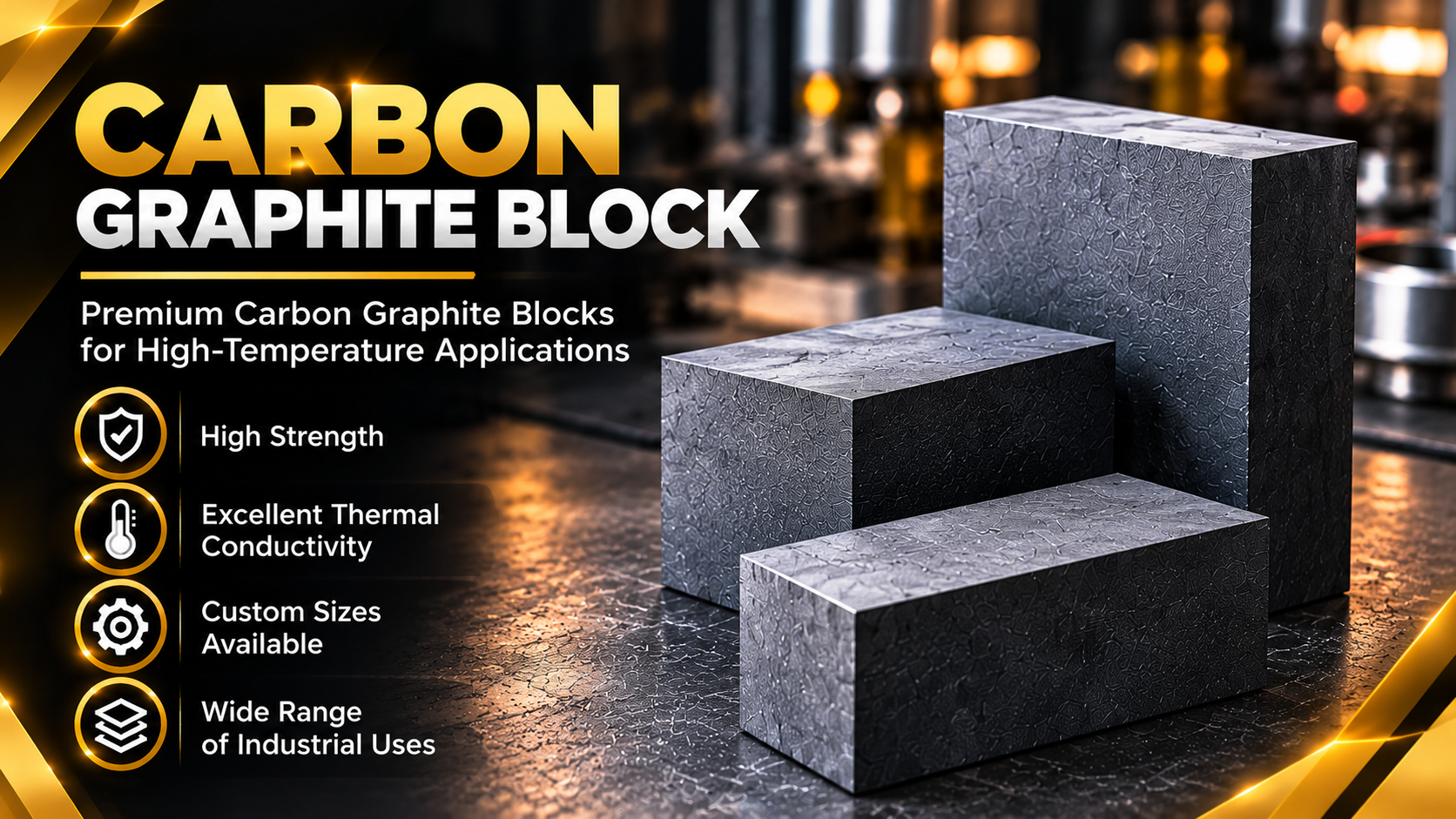
A carbon graphite block is a solid industrial material produced using carbon-based raw materials and manufacturing processes designed to achieve particular physical and mechanical properties.
Graphite has a layered crystal structure that contributes to several of its characteristic properties.
Industrial carbon graphite products may contain different proportions of graphitic carbon and other constituents depending on their manufacturing process.
Carbon graphite blocks are commonly supplied in rectangular, square or customized shapes.
They may be used directly or machined into components for specific industrial equipment.
Common applications include:
- Industrial machining
- Electrical applications
- High-temperature processing
- Selected furnace components
- Mechanical engineering
- Wear-resistant components
- Metal processing equipment
- Specialized manufacturing operations
The correct material grade must be chosen according to the intended operating conditions.
2. Important Properties of Carbon Graphite Blocks
Carbon graphite blocks offer a combination of material characteristics that can be useful in industrial environments.
Thermal Conductivity
Many graphite grades conduct heat efficiently.
The exact thermal conductivity depends on the material structure, density and grade.
Electrical Conductivity
Graphite is electrically conductive and may be suitable for selected electrical applications.
High-Temperature Capability
Graphite can maintain useful properties at high temperatures in suitable environments.
However, graphite oxidizes at elevated temperatures in the presence of oxygen.
Its maximum usable temperature therefore depends strongly on the operating atmosphere.
Machinability
Many graphite grades can be machined into different shapes using appropriate tools and procedures.
Low Friction Characteristics
Graphite’s structure can provide useful friction-related characteristics in selected applications.
Chemical Compatibility
Graphite is compatible with some chemicals and industrial environments, but not all.
Compatibility must be verified for each application.
3. Different Types of Carbon Graphite Blocks
Carbon graphite blocks are available in different grades and manufacturing configurations.
Fine-Grain Graphite Blocks
Fine-grain graphite has a relatively small particle structure.
It may be selected for applications requiring specific machining characteristics or surface quality.
Medium-Grain Graphite Blocks
Medium-grain graphite products are used in suitable industrial applications where their properties meet the required specifications.
High-Density Graphite Blocks
High-density graphite grades are manufactured to achieve particular density and porosity characteristics.
Their suitability depends on the intended use.
Isostatic Graphite Blocks
Isostatic graphite is produced using specialized forming processes that can provide relatively uniform material properties.
It is used in selected precision and high-performance applications.
Extruded Graphite Blocks
Extruded graphite products are manufactured through an extrusion-based forming process.
Their properties may vary according to material direction and manufacturing conditions.
Carbon-Based Engineering Blocks
Some carbon-based blocks are designed for specialized mechanical, electrical or thermal applications.
Buyers should review the material specifications before selecting a product.
4. How Are Carbon Graphite Blocks Manufactured?
The manufacturing process varies according to the product grade and intended application.
Industrial graphite production commonly involves several stages.
Raw Material Selection
Suitable carbon-based raw materials are selected according to the required product characteristics.
Mixing and Preparation
Raw materials may be blended with appropriate binders and additives.
Forming
The prepared material is shaped using methods such as moulding, pressing or extrusion.
Baking
The formed material undergoes controlled thermal processing.
Graphitization
Certain products undergo additional high-temperature processing to develop a graphitic structure.
Machining and Finishing
Blocks may be machined into the required dimensions and shapes.
Quality Inspection
Manufacturers may evaluate density, strength, resistivity and other relevant properties.
The exact production route depends on the material grade.
5. Major Benefits of Carbon Graphite Blocks
Suitable graphite blocks offer several advantages in selected industrial applications.
Versatile Industrial Use
Different graphite grades can support various manufacturing and engineering processes.
Thermal Performance
Graphite’s thermal properties are useful in compatible heat-transfer and high-temperature applications.
Electrical Conductivity
Certain grades are suitable for electrical and electrochemical applications.
Machining Flexibility
Graphite blocks can be machined into specialized shapes and components.
Availability in Different Grades
Manufacturers can select materials according to density, grain size and other specifications.
Potential Operational Value
Correct material selection can support equipment reliability and reduce unnecessary component replacement.
Actual performance depends on operating conditions and maintenance practices.
6. Industrial Applications of Carbon Graphite Blocks
Carbon graphite blocks are used across different industrial sectors.
Metallurgical Industry
Selected graphite materials are used in metal processing and high-temperature equipment.
Electrical Industry
Graphite’s electrical conductivity makes certain grades suitable for electrical components.
Furnace Applications
Graphite products may be used in compatible furnace systems, particularly where the operating atmosphere is appropriate.
Mechanical Engineering
Carbon graphite materials are used in selected bearings, seals and other mechanical components.
Industrial Machining
Graphite blocks can be machined into custom parts for specialized manufacturing requirements.
Chemical Processing
Certain carbon graphite grades are used in compatible chemical processing environments.
Research and Development
Graphite materials are used in laboratories and industrial research applications.
Each application requires verification of the relevant material properties.
7. Carbon Graphite Block vs Other Industrial Materials
Material selection depends on operating conditions and performance requirements.
Graphite vs Steel
Steel generally provides greater structural toughness for many mechanical applications.
Graphite offers different thermal and electrical characteristics.
Graphite vs Ceramic
Ceramics vary widely in their properties.
Some provide excellent electrical insulation or oxidation resistance, while graphite is electrically conductive and has different thermal behaviour.
Graphite vs Copper
Copper offers high thermal and electrical conductivity, while graphite may provide advantages in selected weight, friction or high-temperature applications.
Graphite vs Other Carbon Materials
Different carbon materials have different structures and performance characteristics.
Buyers should compare technical specifications rather than assuming that all carbon-based products are interchangeable.
8. How to Choose the Right Carbon Graphite Block
Selecting the correct graphite block requires consideration of several technical factors.
Application Requirements
Identify the intended industrial process and operating conditions.
Material Grade
Choose a grade with properties appropriate for the application.
Density
Review the material’s density and its relevance to the required performance.
Grain Size
Grain size can influence machining characteristics and other material properties.
Operating Temperature
Confirm the temperature range and operating atmosphere.
Mechanical Strength
Evaluate the required strength and loading conditions.
Electrical Resistivity
For electrical applications, check the material’s resistivity specifications.
Dimensions
Select a block size that accommodates the required finished component.
Supplier Documentation
Request relevant technical information and product specifications.
9. Carbon Graphite Block Machining
Graphite blocks are often machined to produce industrial components.
Machining processes may include cutting, drilling, milling and turning.
The appropriate machining method depends on the graphite grade and required component geometry.
Graphite machining can generate fine dust.
Suitable dust extraction, housekeeping and equipment protection are important.
Operators should use appropriate tools and follow established safety procedures.
Dimensional accuracy and surface quality should be checked after machining.
For precision applications, manufacturers may need to consider tolerances, grain structure and material stability.
10. Important Safety Precautions
Carbon graphite blocks should be handled and processed according to appropriate workplace safety procedures.
Graphite machining dust should be controlled using suitable extraction systems.
Operators should follow the applicable safety data sheet and workplace risk assessment.
Graphite is electrically conductive, so dust accumulation near electrical equipment can create additional hazards.
High-temperature applications require appropriate protection against burns and other thermal risks.
Graphite components should be inspected for damage before use.
Heavy blocks should be handled using suitable lifting and material-handling equipment.
Safe operating procedures are important for maintaining reliable industrial operations.
11. How to Store Carbon Graphite Blocks
Correct storage helps protect graphite products from damage and contamination.
Store in a Clean Area
Keep blocks away from unnecessary dust, dirt and incompatible materials.
Prevent Mechanical Damage
Avoid dropping or striking graphite blocks.
Protect Finished Surfaces
Machined graphite components may require additional packaging or handling protection.
Maintain Product Identification
Label grades and dimensions clearly.
Avoid Unsuitable Storage Conditions
Follow supplier recommendations regarding moisture, temperature and contamination.
Inspect Before Use
Check stored products for cracks, chips or other damage.
Proper storage supports product traceability and reduces unnecessary material loss.
12. Common Mistakes When Buying Graphite Blocks
One common mistake is choosing a graphite block based only on its dimensions.
Material grade and physical properties are equally important.
Another mistake is assuming that graphite can operate indefinitely at high temperatures in air.
Oxidation can significantly affect performance.
Buyers may also overlook machining requirements, grain size or mechanical strength.
Purchasing material without confirming its suitability for the intended application can lead to unnecessary costs.
Businesses should compare technical specifications and communicate their requirements clearly to the supplier.
13. Factors Affecting Carbon Graphite Block Price
Graphite block prices vary according to several factors.
Important considerations include:
- Graphite grade
- Material density
- Grain size
- Block dimensions
- Manufacturing process
- Machining requirements
- Dimensional tolerances
- Order quantity
- Quality documentation
- Supplier and delivery arrangements
Specialized graphite grades may cost more than general-purpose materials.
However, the lowest initial price may not provide the best overall value.
Buyers should consider material performance, processing costs and expected operating conditions.
14. Carbon Graphite Blocks in High-Temperature Applications
Graphite is used in selected high-temperature systems because of its thermal properties.
However, temperature capability must always be evaluated together with the operating atmosphere.
Graphite can oxidize in oxygen-containing environments at elevated temperatures.
Therefore, a graphite component suitable for a vacuum or inert atmosphere may not be suitable for continuous operation in air at the same temperature.
Mechanical loading, thermal cycling and chemical exposure also affect component performance.
For high-temperature applications, buyers should request grade-specific information and confirm compatibility with the equipment manufacturer.
15. Quality Factors to Consider Before Purchasing
Industrial buyers should evaluate several quality-related factors.
Material Specifications
Check the available grade and property information.
Dimensional Accuracy
Confirm the required dimensions and tolerances.
Surface Condition
Inspect for visible cracks, chips and other defects.
Consistency
For repeat purchases, consistent material specifications can help maintain manufacturing processes.
Traceability
Where necessary, request batch identification or relevant documentation.
Application Compatibility
Confirm that the material is suitable for the intended environment.
These considerations can help businesses make more informed purchasing decisions.
16. Why Consider Jiyal Trading Co. for Graphite Products?
Jiyal Trading Co. is based in Rajkot, Gujarat, India.
The company offers products associated with graphite applications, jewellery manufacturing and industrial equipment.
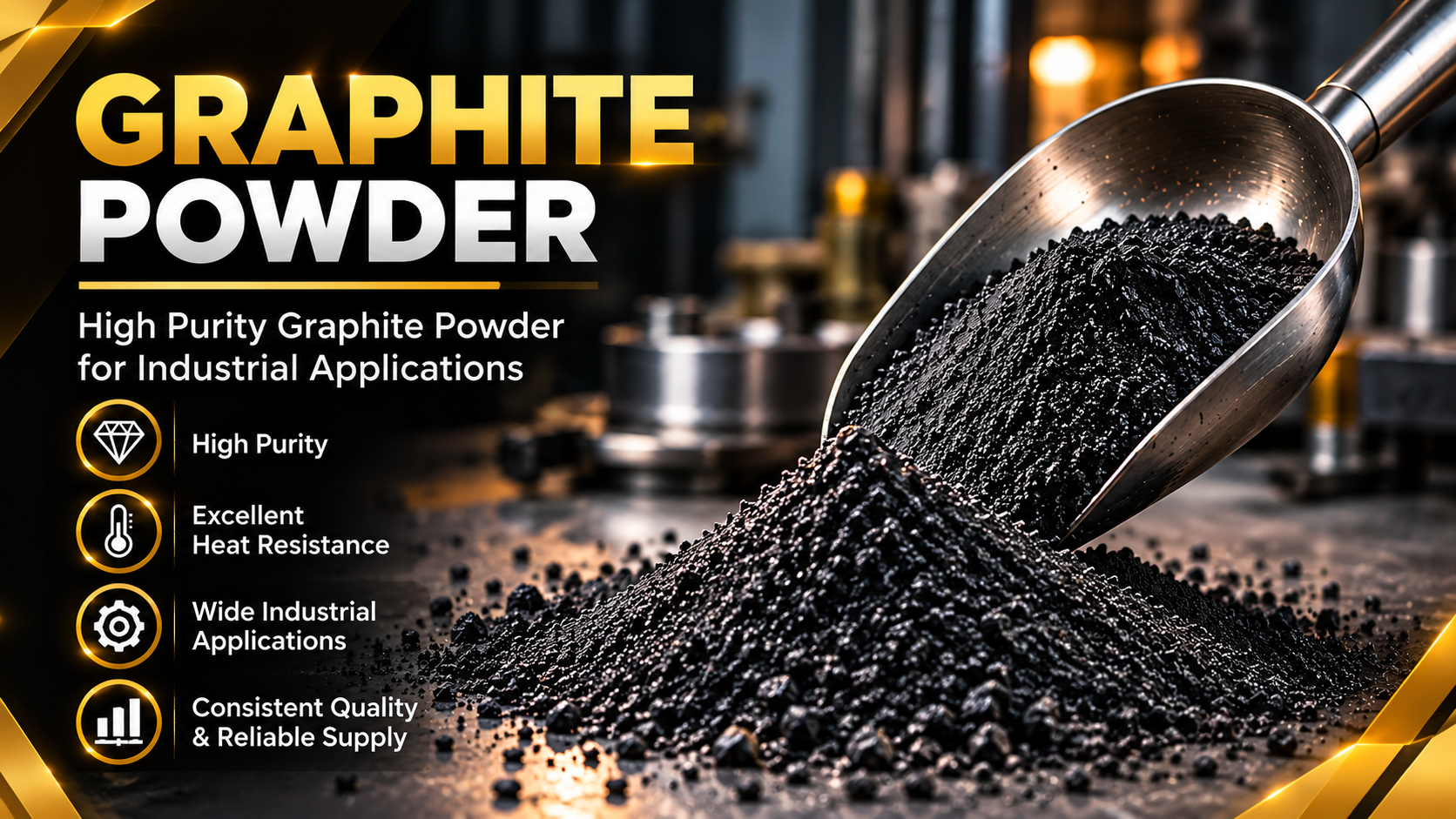
Its listed product range includes carbon graphite blocks, graphite crucibles, graphite powder, carbon rods and other industrial products.
Customers seeking graphite blocks can contact Jiyal Trading Co. to discuss available products, dimensions, quantities and specifications.
Before placing an order, buyers should verify the relevant technical details and current availability.
17. Frequently Asked Questions About Carbon Graphite Blocks
Q1. What is a carbon graphite block?
A carbon graphite block is a solid carbon-based industrial material used in suitable thermal, electrical, mechanical and manufacturing applications.
Q2. What are graphite blocks used for?
Graphite blocks are used in selected furnace components, electrical applications, machining, mechanical engineering and other industrial processes.
Q3. Are graphite blocks heat-resistant?
Graphite can perform at high temperatures in suitable environments, but its temperature capability depends strongly on the operating atmosphere.
Q4. Can graphite blocks be machined?
Yes. Many graphite grades can be cut, drilled and machined using suitable equipment and procedures.
Q5. Are graphite blocks electrically conductive?
Yes. Graphite is electrically conductive, although resistivity varies by grade.
Q6. What is the difference between carbon and graphite?
Carbon is a chemical element, while graphite is a particular crystalline form of carbon.
Q7. How do I choose a graphite block?
Consider the intended application, grade, density, grain size, strength, temperature conditions and dimensions.
Q8. Where can I inquire about carbon graphite blocks in Gujarat?
Customers can contact Jiyal Trading Co. in Rajkot, Gujarat, for information about available graphite products.
Conclusion
Carbon graphite blocks are versatile industrial materials used in a range of specialized manufacturing and engineering applications.
Their thermal characteristics, electrical conductivity and machinability make them useful when the correct material grade is selected.
However, not all graphite blocks offer the same performance.
Buyers should carefully evaluate material specifications, operating temperature, atmosphere, mechanical requirements and machining needs.
Proper handling, storage and quality inspection are also important.
Jiyal Trading Co. offers graphite products and related industrial materials for different customer requirements.
For product details, availability and quotations, visit:
Website: https://rituindustriesrajkot.com
Company: Jiyal Trading Co.
Location: Rajkot, Gujarat, India.
Contact Jiyal Trading Co. to discuss your carbon graphite block and industrial graphite product requirements.